
One of the biggest differences between doing tricks and presenting a polished magic act is sequencing. Well-sequenced magic feels effortless: props reappear, ideas build, jokes echo back later, and the audience senses an underlying logic—even if they can’t articulate it.
Sequencing doesn’t mean every trick must blend into one long routine. Sometimes it’s about reusing a prop. Other times it’s pacing, callbacks, or simply responding to the audience in the moment.
To explore this topic, I asked several professional magicians the question:
“How do you sequence tricks in your act or combine tricks so one leads naturally into the next?”
Their responses reveal several practical approaches that any magician—close-up, strolling, kids, parlor, or stage—can immediately apply.
Using Prop Continuity to Create Natural Transitions
Andy Makar (http://www.magicfunman.com) shares an idea to sequence magic tricks by reusing a prop the audience already recognizes. This creates a subconscious through-line and eliminates the feeling of constantly “starting over.”
Kid Show Example: Change Bag Sequencing

In my kid shows, I often begin with a Change Bag and a The White Handkerchief trick. A child reaches inside expecting a white silk—but instead pulls out a foam banana.
That moment launches a sequence:
- Foam banana leads into the Multiplying Bananas
- At the end of that routine, I find the white handkerchief in my case and transition to The Bread Trick from David Kaye’s Seriously Silly - How To Entertain Children With Magic And Comedy (https://sillymagic.com/products/seriously-silly)
- After the Bread Trick, I transition to a Mis-Made Flag, using the same change bag and adding the blue handkerchief.
From the audience’s perspective, this feels like one continuous magical journey rather than several disconnected tricks.

If you want some of the best bananas on the market, try Tom Frank's Yes We Have No Bananas
Turning a Signed Card Into a Running Plot
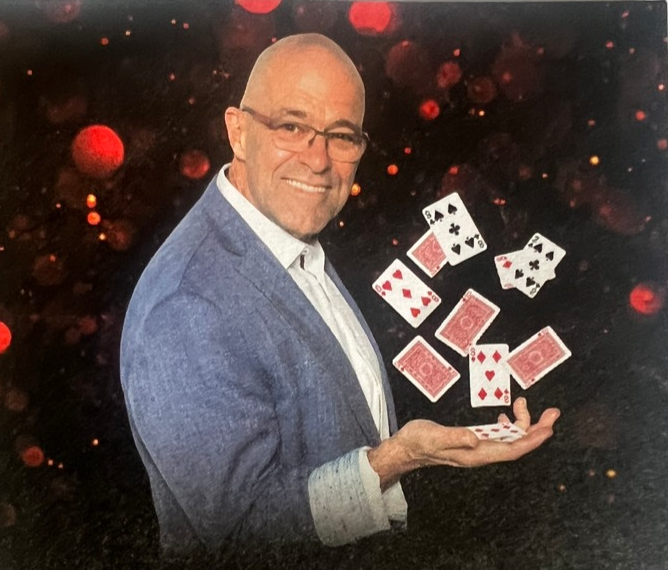
Eric Bedard (https://ericbedard.ca/) shared a powerful idea: don’t let the story end when the trick ends.
He often begins with a signed card, performs a short Ambitious Card sequence, and then places the signed card under the card box “to get it out of the way.”
Later in the act:
- Two new spectators select cards
- When the first selection is revealed, it’s the original signed card
- The selected card is now under the box
- The sequence escalates into transpositions, ending with a card appearing inside the card box
The signed card becomes a recurring character—something the audience remembers and reacts to emotionally.
Eric also notes an important distinction:
- Strolling magic often requires flexibility rather than rigid sequencing
- Parlor and stage shows benefit from a defined opening, middle, and closer built on a continuous thread
Context determines the structure!
Ending One Trick Inside the Next

Fred Lenter’s (https://www.facebook.com/fredlentermagic/) approach to sequencing is direct and highly practical: end a routine in a position that demands a follow-up.
Coins Across to Copper/Silver
- Perform a Coins Across
- At the conclusion, ask a spectator to “pick a coin”
- Immediately transition into a Copper/Silver transposition in their hand
The magic never pauses—and neither does the audience’s attention.
Silk Up the Sleeve to Balls Routine
- Perform Scarf Up the Spectator’s Sleeve
- During the applause, steal a ball
- Announce, “I’ll now do the color-changing scarf trick”
- Instead of changing color, the scarf transforms into a ball
- Continue directly into Perpetual Balls from Hand and Mouth
Applause becomes misdirection, and the end of one trick becomes the setup for the next.
Sequencing Through Interaction and Improvisation

Gordon Russ (https://gordonthemagician.com/) focuses less on rigid trick order and more on organic transitions.
Key principles from Gordon:
- Transitions can be a joke, a question, or a reaction to a spectator
- In strolling situations, sequencing often depends on what’s available on the table
- While performing one trick, he’s already considering what should come next
When props naturally carry over, multiple effects can feel like one long routine—even if the audience never consciously notices the structure.
Using Pacing Instead of Shared Props
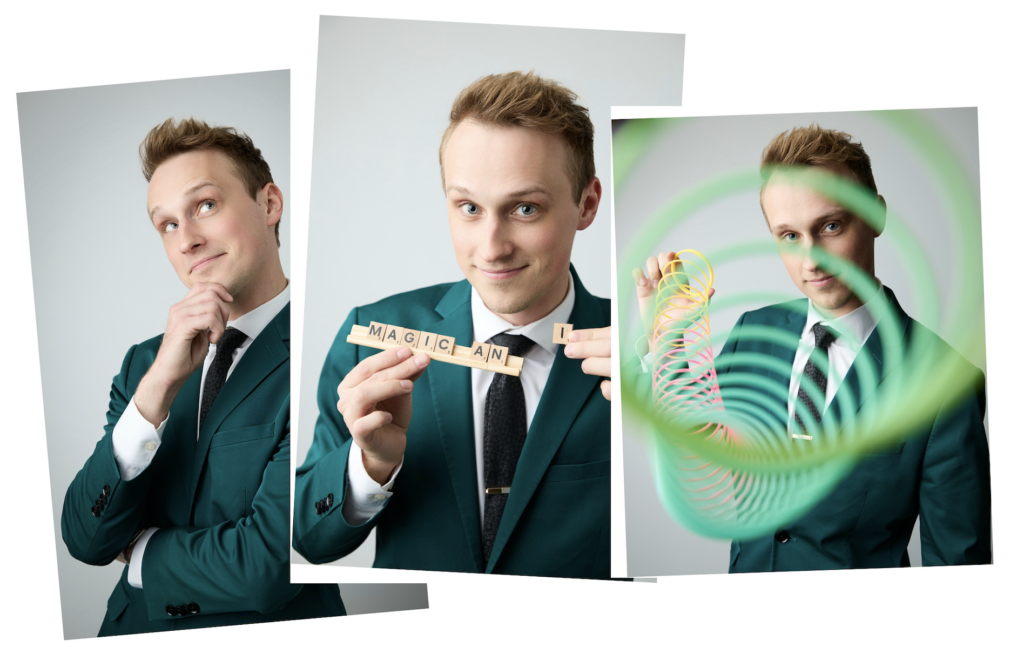
Ferran Charles (https://ferrancharles.com/) suggest not all sequencing relies on prop continuity.
Ferran Charles emphasizes pacing and contrast:
- Follow a slow, story-driven trick with something fast and visual
- Alternate emotional beats: mystery → laughter → astonishment
- Think of the act as a roller coaster, not a straight line
He also highlights the power of callback humor:
- A gag prop like Ferran’s signature Bendy Pen keeps reappearing throughout the show
- Each reappearance builds familiarity, then anticipation, then laughter
Even without shared props, strong pacing creates flow.
Jazzing and Flexible Sequencing in Close-Up Magic
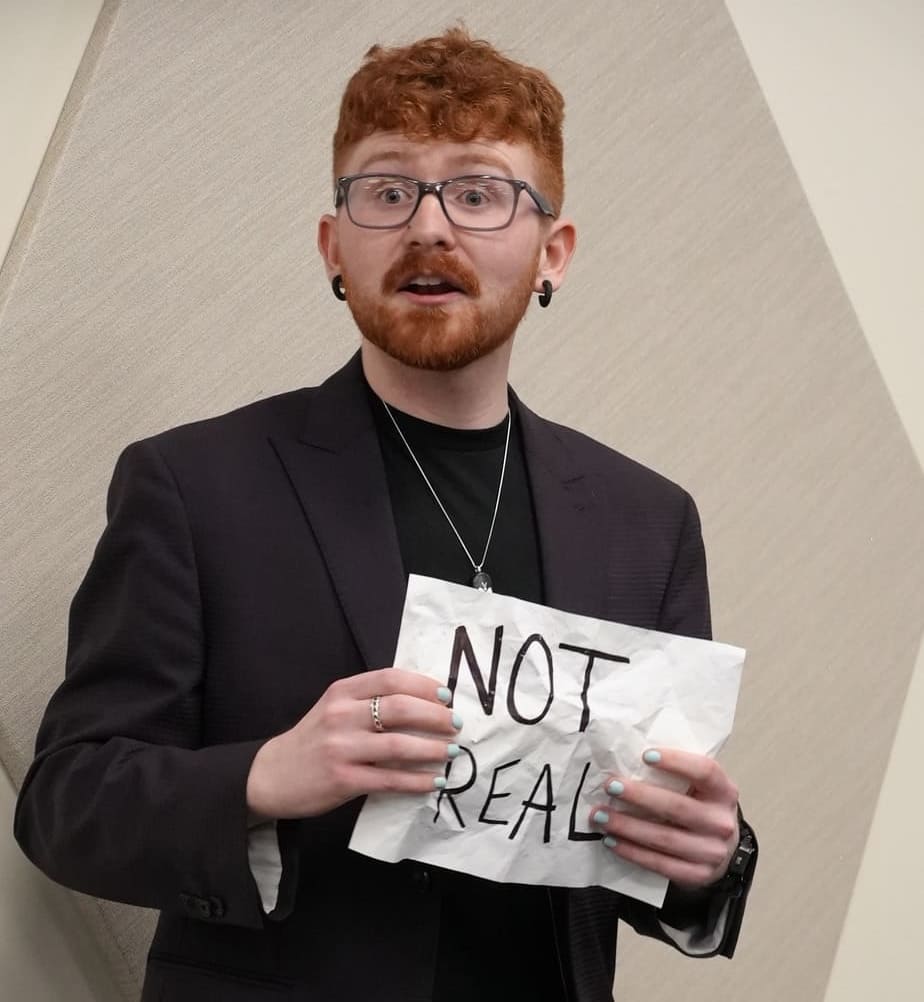
Dreygon Hibbler (https://dreygonmagic.com/) describes his approach as jazzing—structured improvisation.
He often:
- Brings 3–4 core tricks to a gig
- Decides sequencing based on audience reactions
- Creates spontaneous transitions from comments or unexpected moments
The most important skill here isn’t perfect flow—it’s knowing how to end a routine cleanly, even if the transition wasn’t ideal.
Strong endings forgive imperfect sequencing.
Practical Trick Sequences Magicians Can Use
Here are example trick chains inspired by the ideas above:
- Change Bag → Silk Production → Silk Color Change → Mis-Made Flag
- Signed Card → Ambitious Card → Card Under Box → Card Inside Box
- Coins Across → Copper/Silver → Coin to Impossible Location
- Silk Up Sleeve → Silk to Ball → Multiplying Balls
- Sponge Ball Appearance → Sponge Ball Multiplication → Sponge Ball to Pocket
- Comedy Prop Callback → Serious Effect → Surprise Reappearance
Each sequence creates continuity while remaining flexible for different venues.
A Simple Framework To Sequence Tricks

Ron Bauer taught me a framework that uses logical sequencing without requiring tricks to depend on one another method-wise. The presentation connects them—even if the mechanics do not.
Ron wrote The Big Bag of Tricks and Little Black Hats as a tribute to David Ginn back in 1981. The format provides a means to easily arrange several unrelated magic tricks into a magic show without a writer or a producer.
I’ve used this framework for all my kid shows and several parlour shows. Learn more at https://www.thinklikeaconjurer.com/insideinfo/freebies/bigbag/bigbag.htm
Final Thoughts: Sequencing Is About Momentum
Sequencing magic tricks isn’t about showing how clever the magician is—it’s about maintaining momentum.
Whether you:
- Reuse props
- Carry a signed object forward
- Build one long routine
- Control pacing
- Or improvise based on audience energy
The goal is the same: reduce dead space and increase impact.
When magic flows well, the audience doesn’t notice the seams.
And if they do?
Make it funny.
Make it surprising.
Or make it impossible.